The community in a cemetery
Cemeteries are an under-appreciated community asset.
I remember once debating land use and zoning on a podcast in Austin, Tex. The host, who was skeptical of any changes to Austin's notoriously restrictive zoning code, listed a bunch of things that single-family homeowners shouldn't have to worry about in their neighborhood. I can't track down the recording, so I'm going off memory, but he cited a bunch of stuff that people always complain about: liquor stores, payday lenders, landfills.
But there was one use that stuck out to me: cemeteries.
What's wrong with living near a cemetery? None of the typical NIMBY complaints that often stand in the way of new homes for the living — noise, traffic, crime — are a concern. The dead keep quiet and never walk on your lawn.
But I don't merely find cemeteries innocuous. I think they're quite valuable. I seek them out. I find them peaceful, meditative. Above all else interesting.
Cemeteries are a physical link to a community's past. Walking around one can teach you a lot about a place and its people. The other day I took about 15 minutes to stroll around the headstones at St. Anthony of Padua Roman Catholic Parish here in Ambler.
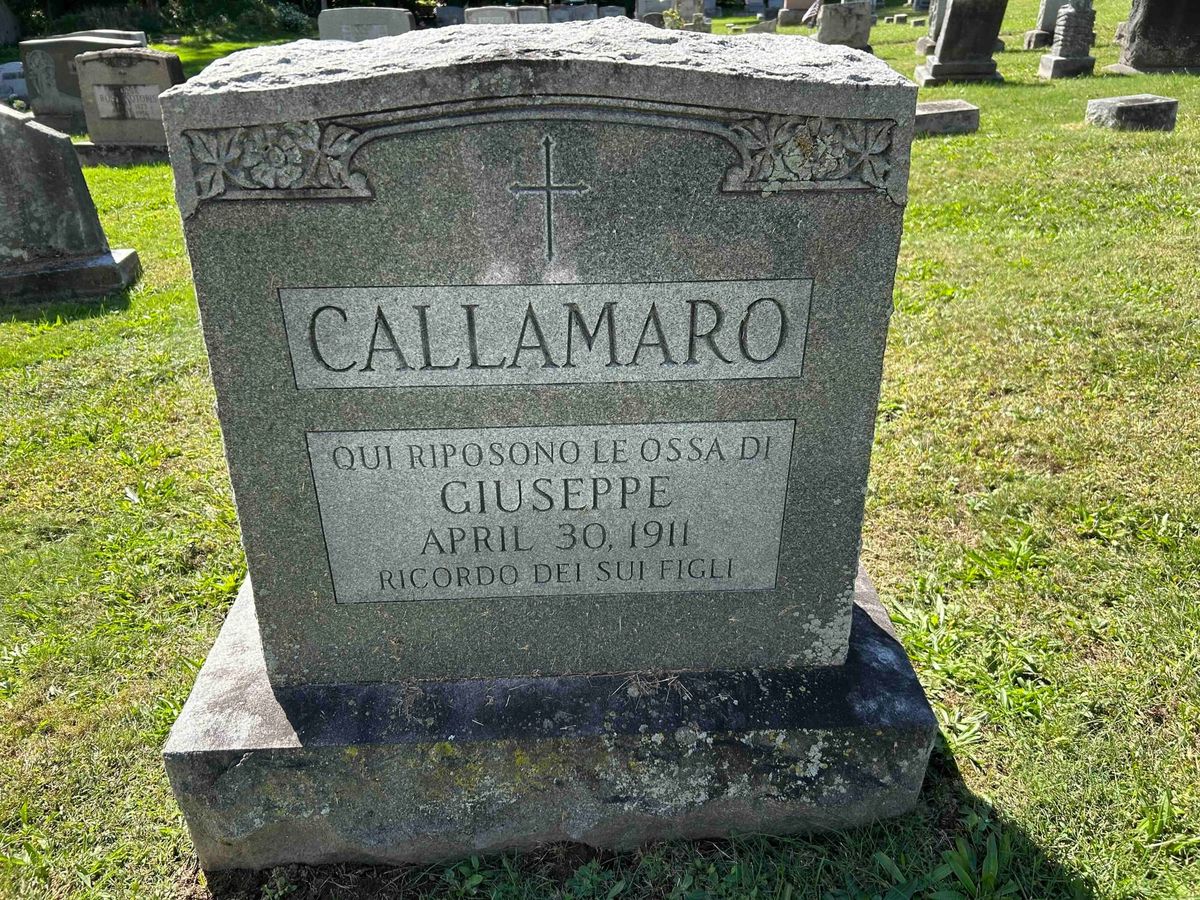
The head stones tell the story of immigration and assimilation in Ambler. The very oldest graves have Irish or German names. In subsequent decades, however, you start to see the names of Italians who began arriving at the end of the 19th century, mainly to work as stone masons or in the asbestos plant. Many of them are in Italian and feature a photograph of the deceased:
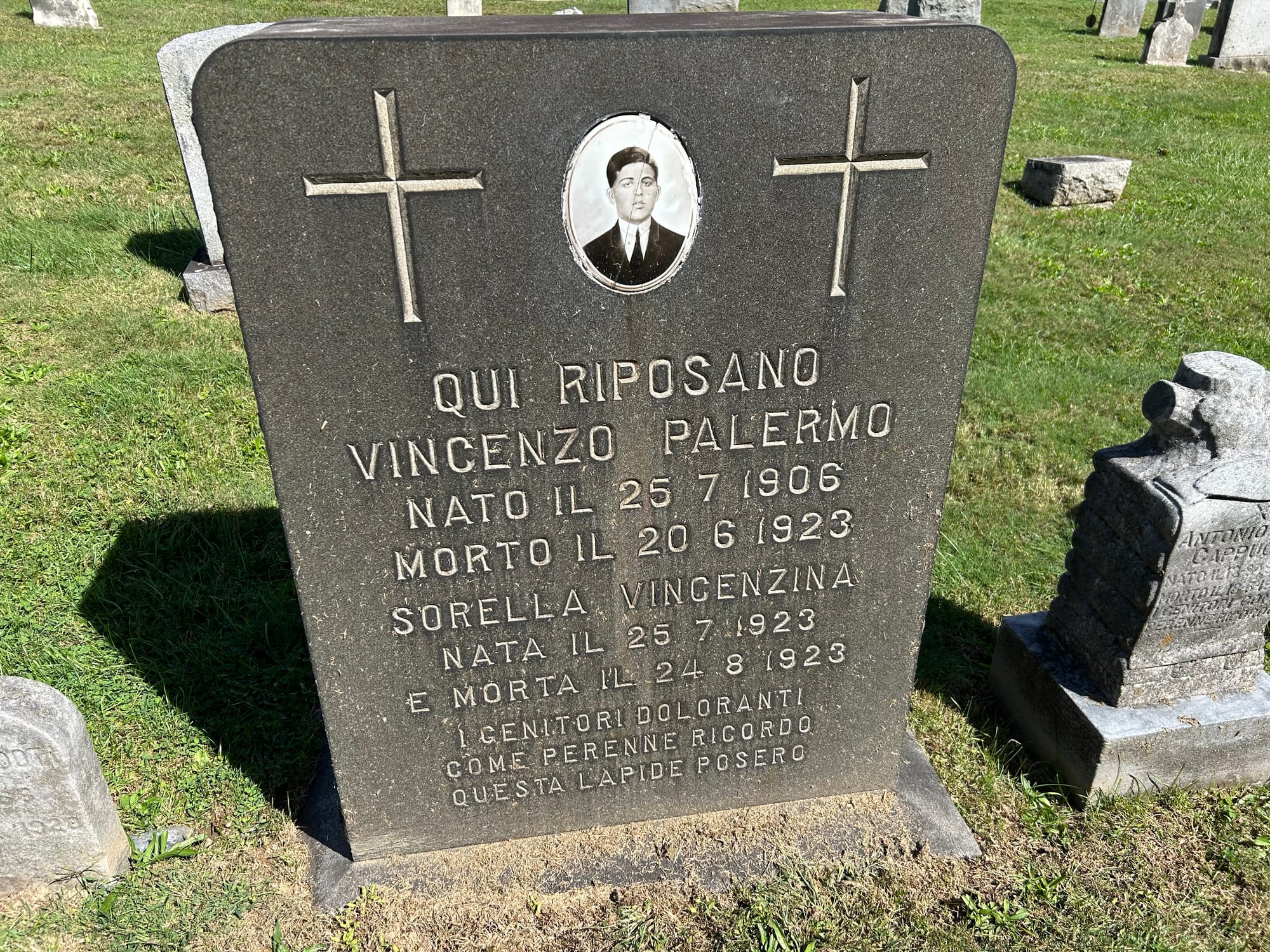
This grave was particularly striking. The young man in the photo, Vincenzo Palermo, died at 16 in 1923. A few weeks later, on what would have been his 17th birthday, his younger sister, Vincenzina, was born. She died only a month later.
"The grieving parents, as a perpetual remembrance, placed this gravestone," it says.
An utter tragedy, but one that also fills me with a sense of awe and gratitude. These people's lives were hard. They came to America for the privilege of performing back-breaking labor and inhaling asbestos fiber. If they got hurt on the job, they were shit out of luck. As many of the other nearby graves attest, burying children was hardly unusual. The legacy of all that hardship is the rich, Italian-infused culture that remains in Ambler today.
Just like today's immigrants from Latin America, Catholic immigrants from Europe prompted fierce xenophobic resistance, fueling the resurgence of the Ku Klux Klan in the 1920's and the passage of the Immigration Act of 1924, which sought to restrain immigration from southern and eastern Europe.
It's common for people today to claim that the immigrants of yore eagerly assimilated in ways that today's immigrants refuse. It's utter bullshit; the opposite is true. Immigrant groups that came to the U.S. in the 19th century in many cases remained far more culturally isolated and continued speaking the language of the mother country for many generations. I've met Cajuns in Louisiana whose grandparents – likely 8th generation Americans — never learned English. Today, however, it is exceedingly rare to encounter a second-generation immigrant who doesn't speak English well.
If you're a high school teacher trying to impress upon kids just how much things have changed over the past century, what better lesson could there be than a trip to this gravestone?
What is a legacy?
A couple years ago I read a great book, Immortality: The Quest to Live Forever and How it Drives Civilization by philosopher Stephen Cave, about the different ways that humans try to deny death. One way is by creating a legacy that will endure after you're gone. That's why rich people get their names put on buildings. And it's perhaps why many of us have children. We comfort ourselves knowing that a part of us will live on in our kids and grandkids.
A trip to a cemetery will remind you that even that legacy is fleeting. Many of those graves haven't been visited in decades. Everybody who ever knew the person has since joined them in the ground. Let's be real: how many of your 16 great-great grandparents' graves have you visited? How many of them can you even name?
Is that depressing? I don't think it needs to be. It can also imbue you with appreciation for your own extraordinarily improbable existence, which is the product of millions of people you've never met. You too will leave a mark on the world that is felt by millions of future people you'll never meet. That is true whether or not you have children.
Had Vincenzo Palermo lived to adulthood, he would have most likely eventually married and had kids himself. Instead, the woman he would have married ended up marrying another guy and having different kids. As generations pass and the number of ancestors multiply, the implication of Vincenzo's premature death becomes enormous, determining the existence or nonexistence of millions of future people.
We shouldn't shun cemeteries or push them to the peripheries of our communities. We should be happy to have them nearby, teaching us about the past and hopefully enhancing our appreciation of the present.