Why some public spaces suck
Even very "nice" public spaces often repel human beings.
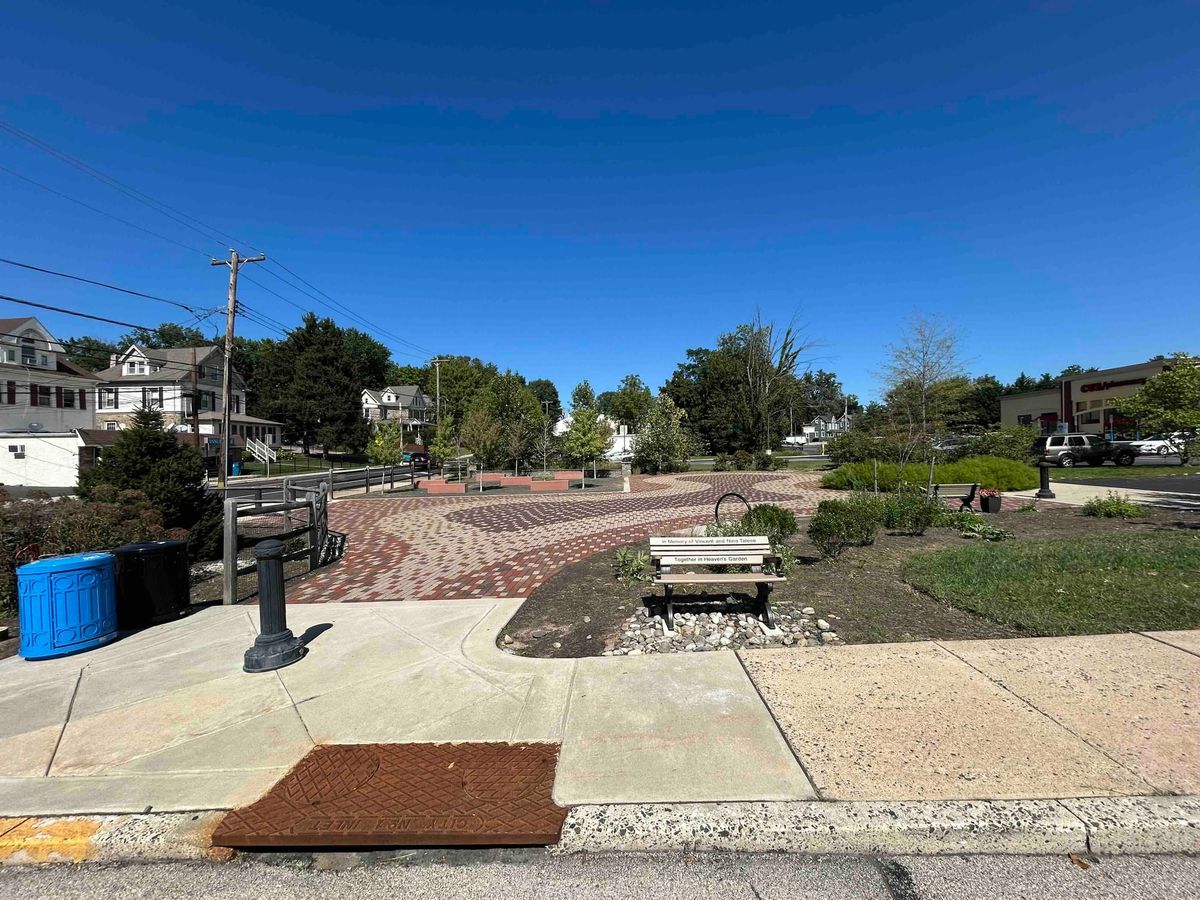
The other day I wrote about the value of spaces and events that foster human interaction. Today I'm going to talk about a well-meaning space that failed in that regard.
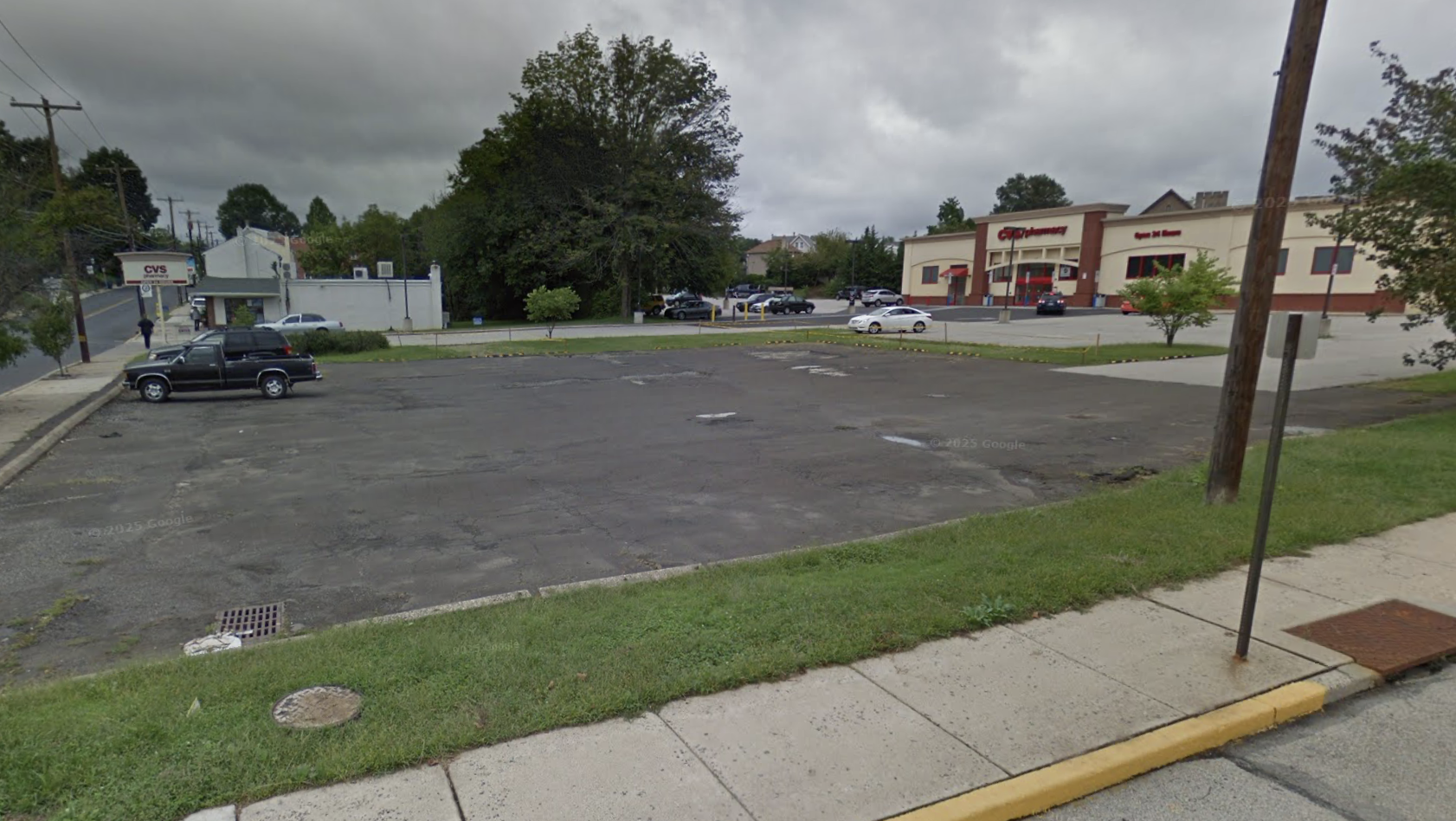
The story begins with this ugly parking lot right here in Ambler, Pa., circa 2018. Nobody imagines having a picnic here, obviously:
It has since been transformed into a public plaza, Ambler Square:
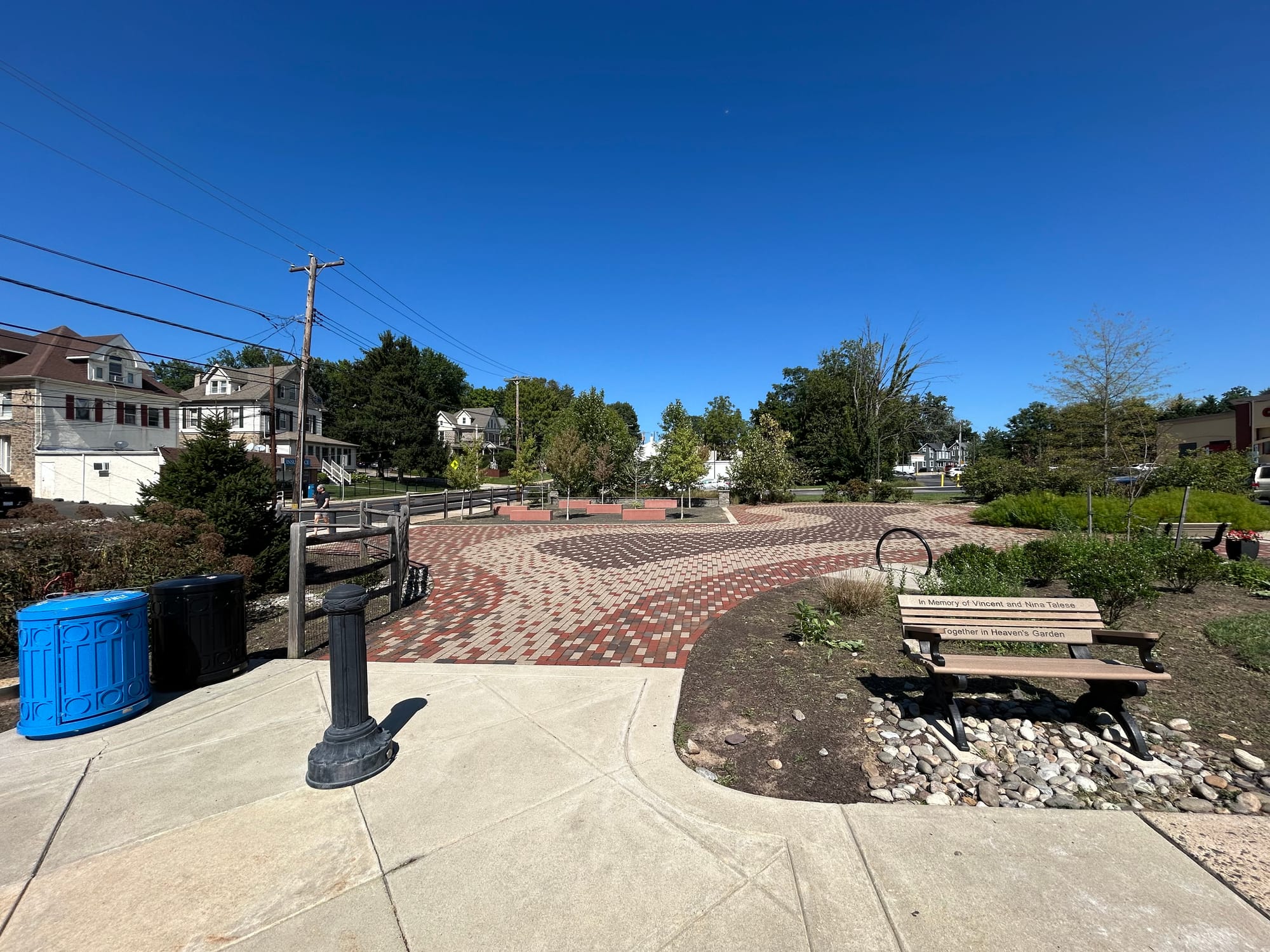
Here's a view of the other side of the square. I don't have the design vocabulary to describe the boxy-looking benches, but I imagine somebody put some thought into it.
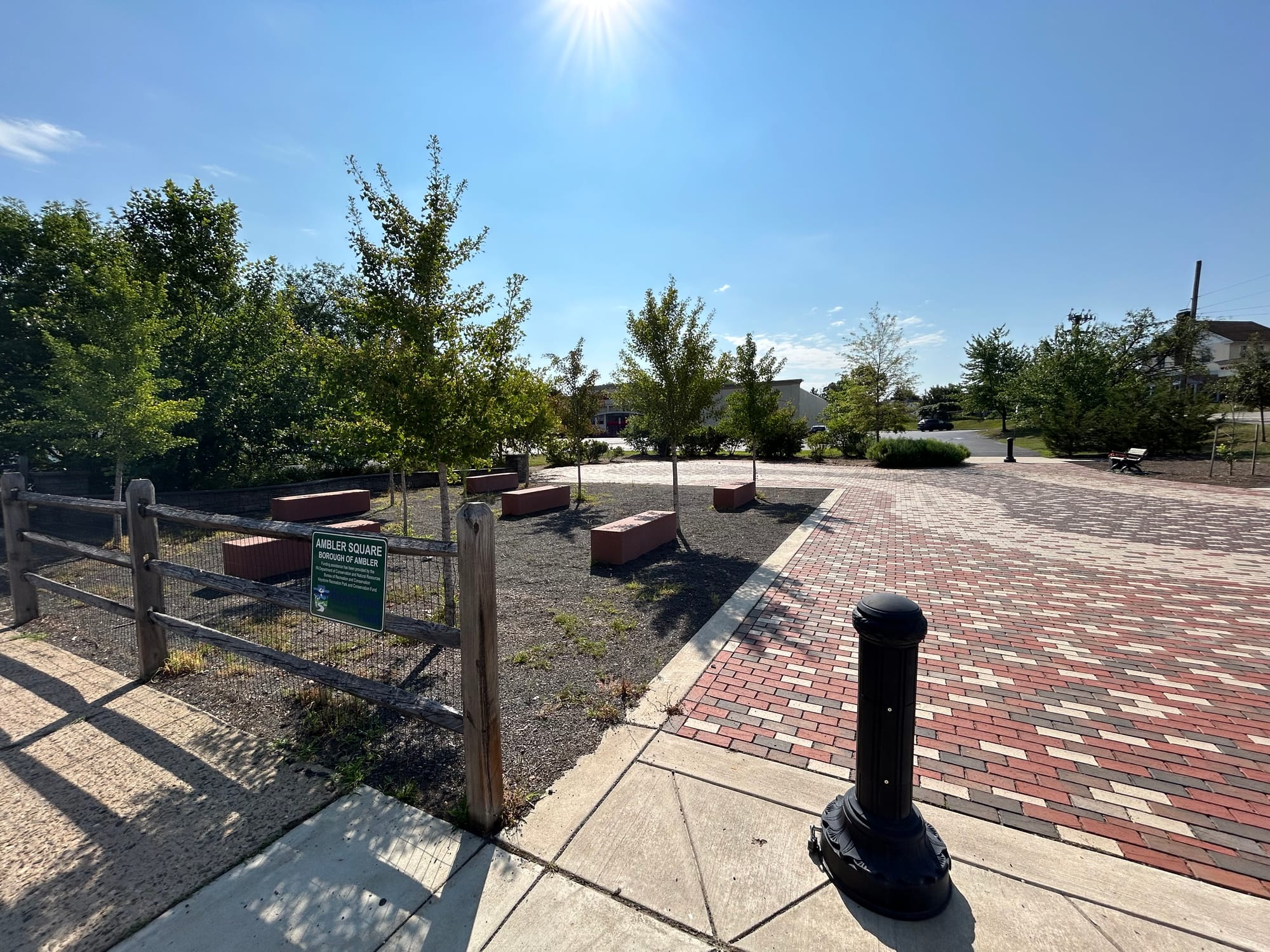
Anyway, whatever your feelings are on the benches, it definitely looks a lot nicer than what existed before. If the goal was to replace an eyesore with something that looks pleasant, the plaza has been a success.
But if the goal was to develop a public space that the public actually uses, Ambler Square has failed. I've never seen somebody sitting on one of those benches. I've asked numerous people if they've ever seen anybody using the square. Everybody says no.
Why is such a lovely public space so persistently shunned by the public?
This one is pretty easy. The plaza is a victim of its surroundings. The biggest problem, of course, is CVS. Chain retailers like CVS and Walgreens simply do not vibe with public spaces. Let me explain.
A traditional Main Street retailer has a keen interest in its surroundings and its presentation. It wants to be near other stores that attract foot traffic. It wants people to wander by its windows and be enticed by its products and personality. Like a public space, they are offering an experience.
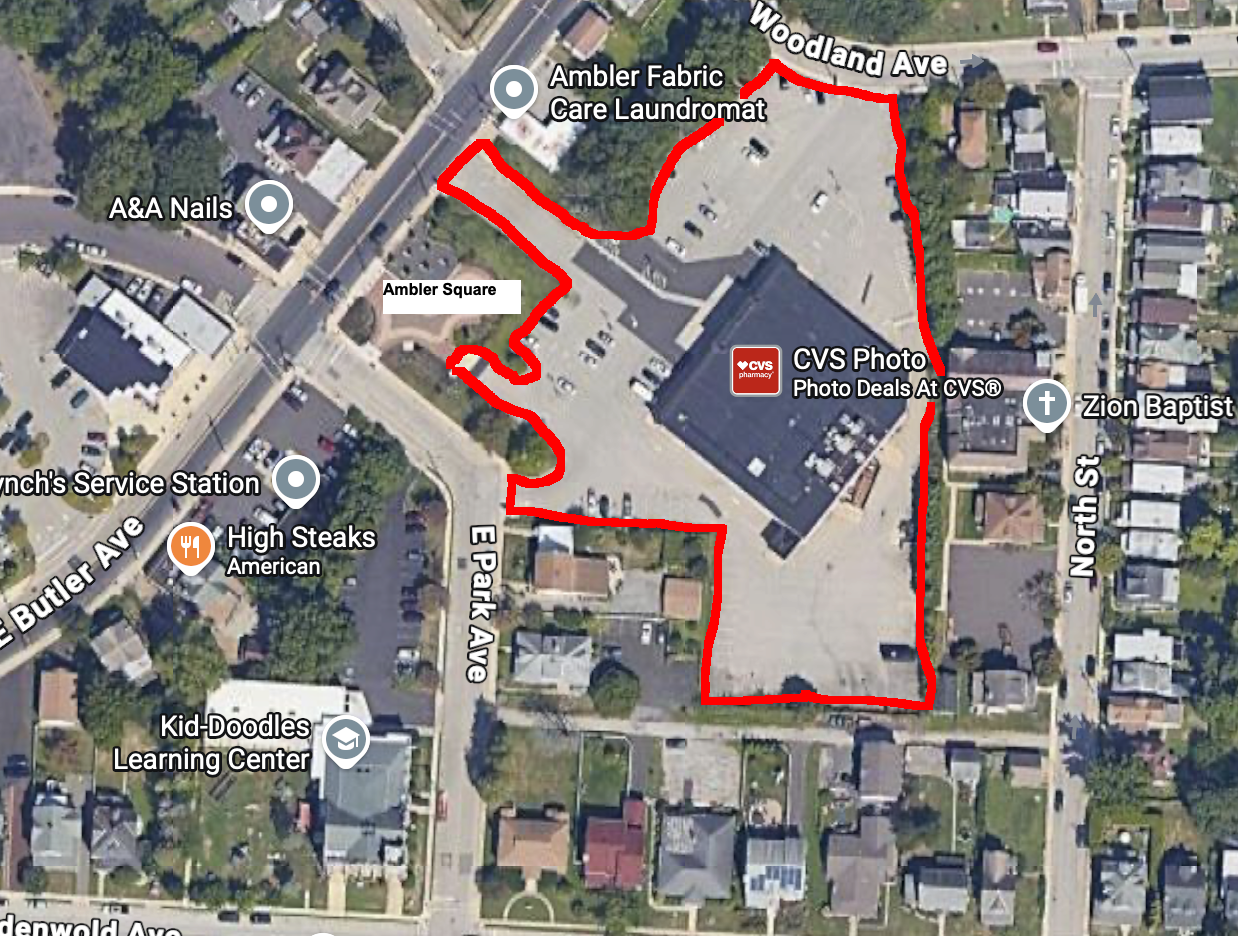
CVS and Walgreens don't give a shit about any of that. In most cases they have no interest in attracting pedestrian visitors. The store is typically set back far from the street, ringed by a giant parking lot. Even when they set up storefronts in urban centers where they can't build parking lots, they still don't bother putting up street-level windows or they glaze over them to prevent you from seeing in the store, a fact that Philadelphia Inquirer architecture critic Inga Saffron has bemoaned over the years.
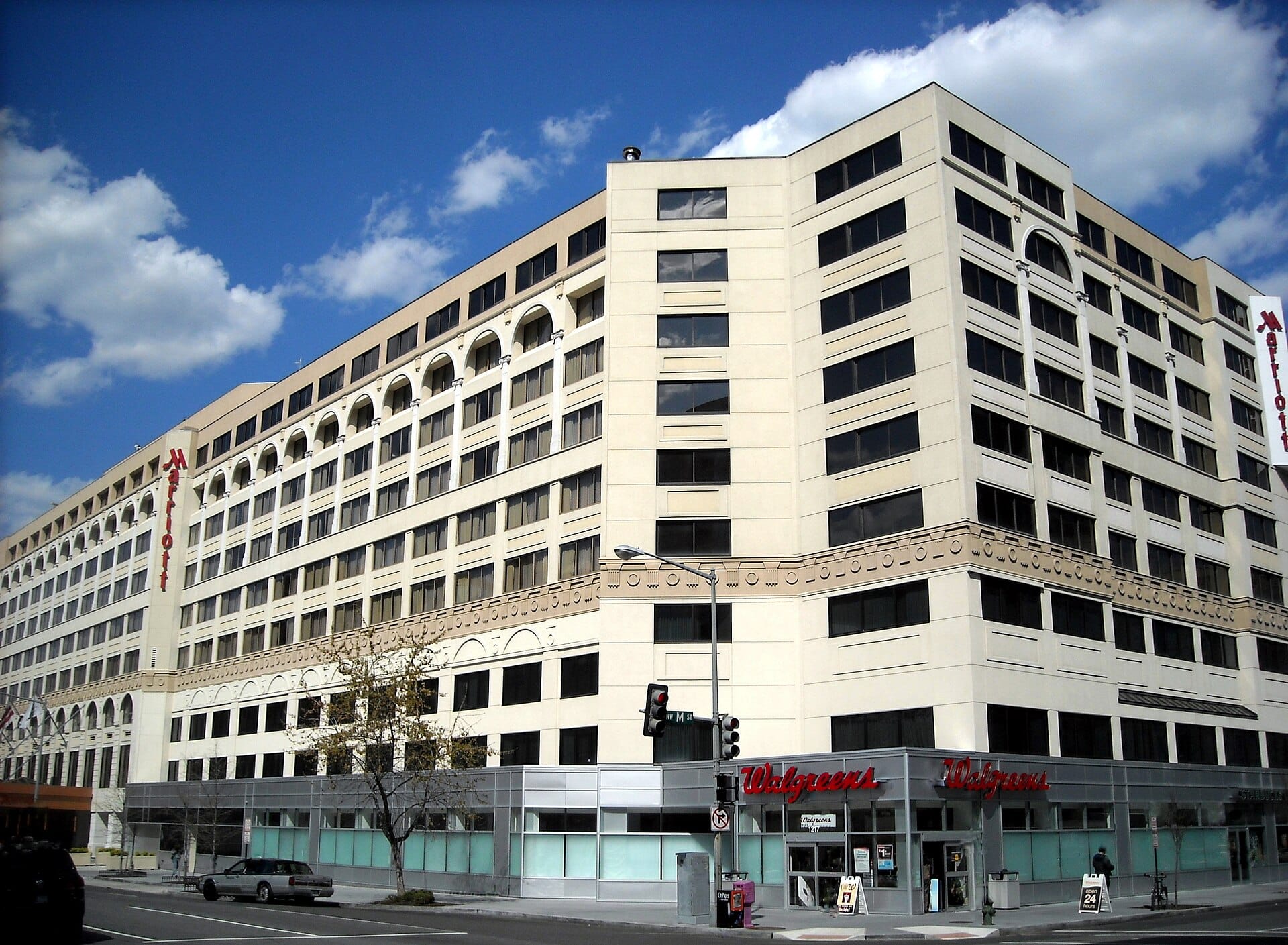
Just look at how the CVS's giant asphalt property dominates, engulfing the park like a gerrymandered congressional district. There are homes and other businesses not far from the park, but they're cut off by the CVS hegemon. That's the power of a big parking lot. Even if it's not that big, walking past one feels like an eternity. It's a major buzzkill on a stroll.
For your convenience I illustrated the point on MS Paint because none of the AI jerks would do it right.
OK, so we've established that CVS is a problem. But it's not Ambler Square's only problem. The road may be a bigger one.
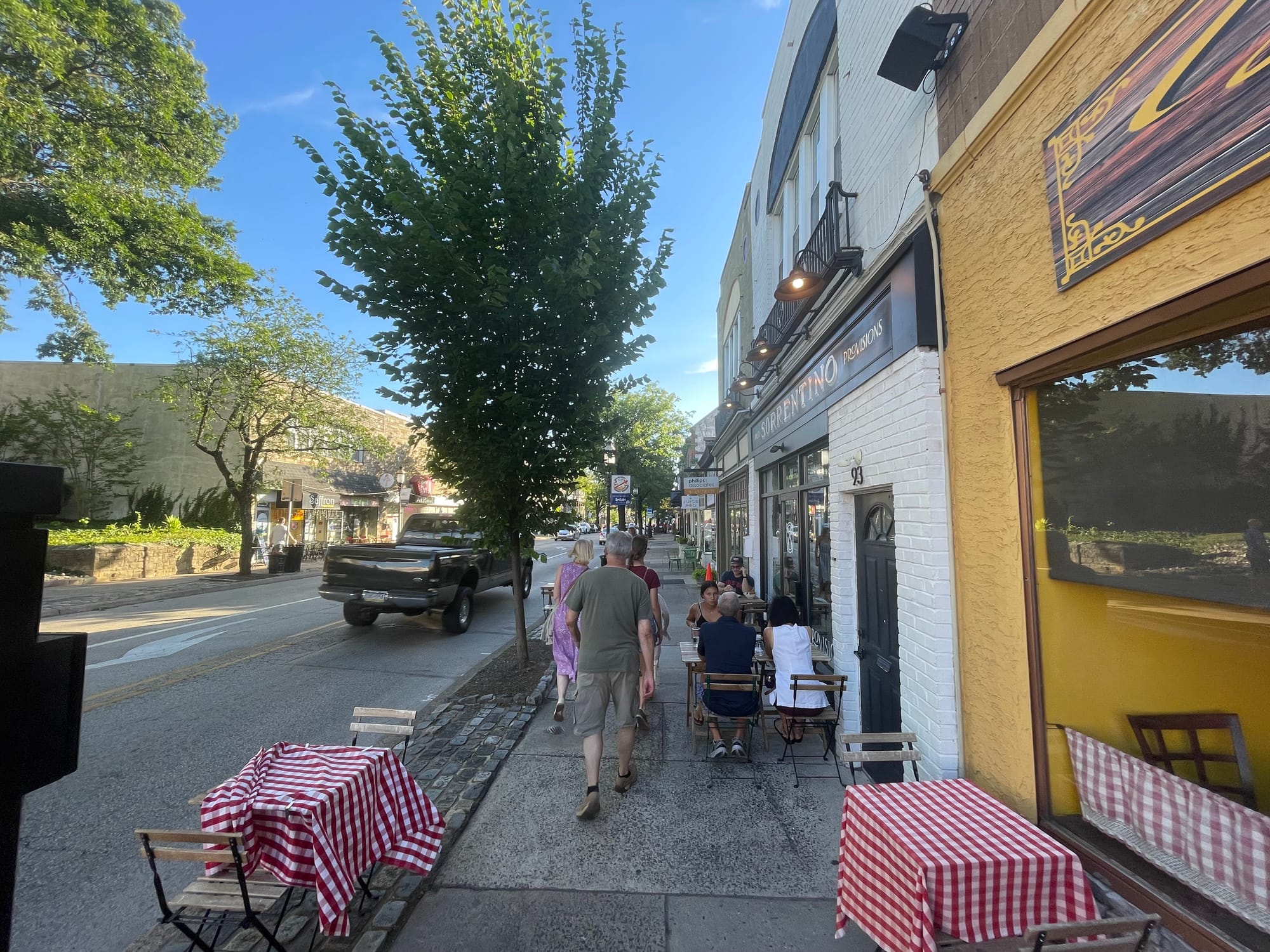
There are several blocks of Butler Ave., Ambler's main commercial corridor, that offer a classic intimate Main Street vibe due both to the density and variety of businesses and — crucially — slow-moving vehicle traffic.
No, the sidewalks are not particularly wide and there are no bike lanes, but the vehicle lanes are narrow, in part due to on-street parking. There is relatively little distance between stoplights. All of these factors lead to cars moving more slowly, key to creating a comfortable walking environment.
Here's that segment of Butler on a normal day:
Just across the street from this is the front yard of a church that has become a natural gathering spot for people, mostly but not exclusively to eat water ice from nearby Rita's:
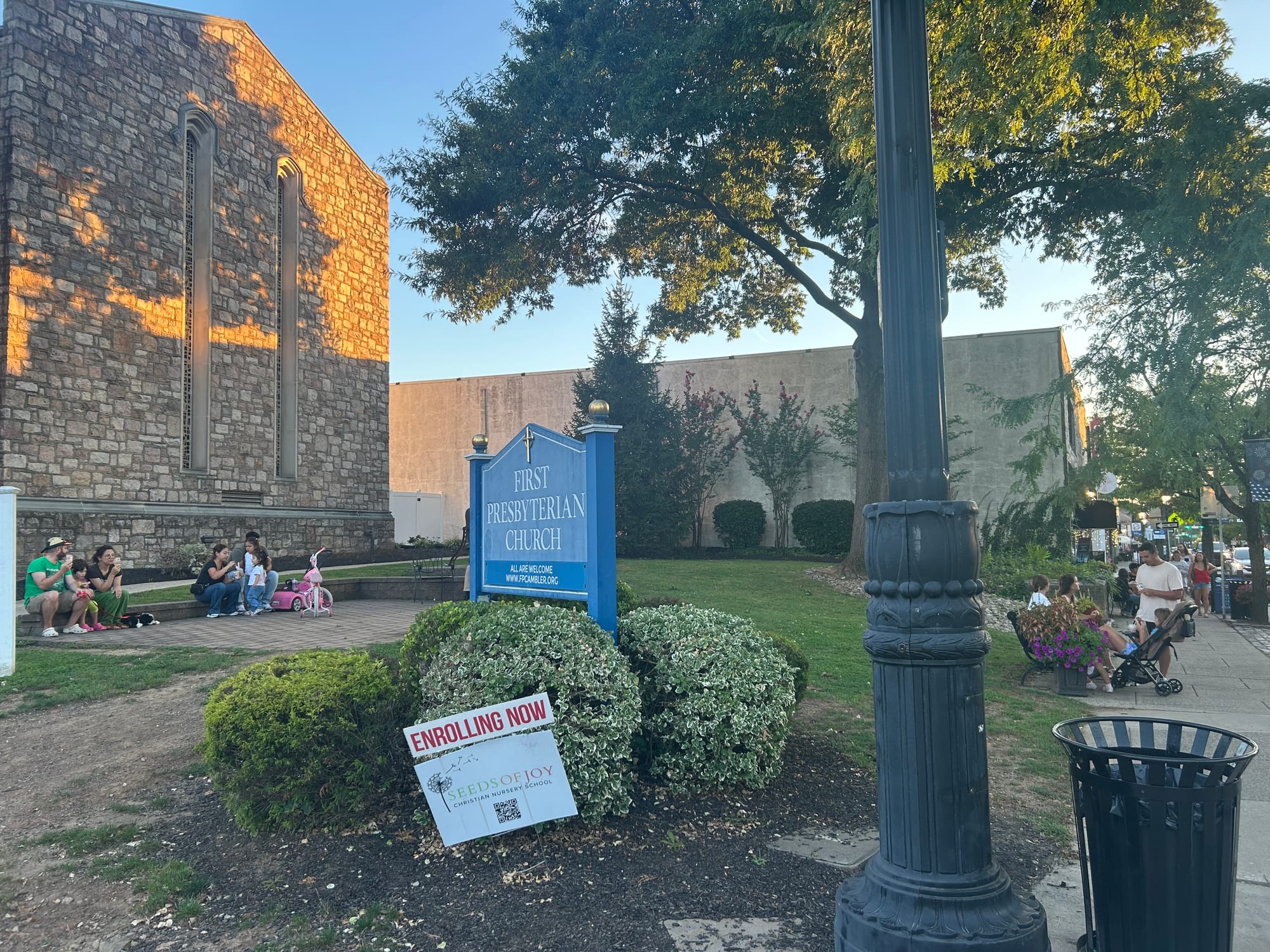
The yard itself is pleasant, but what creates the ambiance is the buzz of nearby main street activity.
That attractive, pedestrian-oriented version of Butler Ave. is only about a third of a mile long. The part of the road where Ambler Plaza is located is oriented more towards cars. The lanes are wider and there is no on-street parking. Both of these things prompt motorists to drive faster.
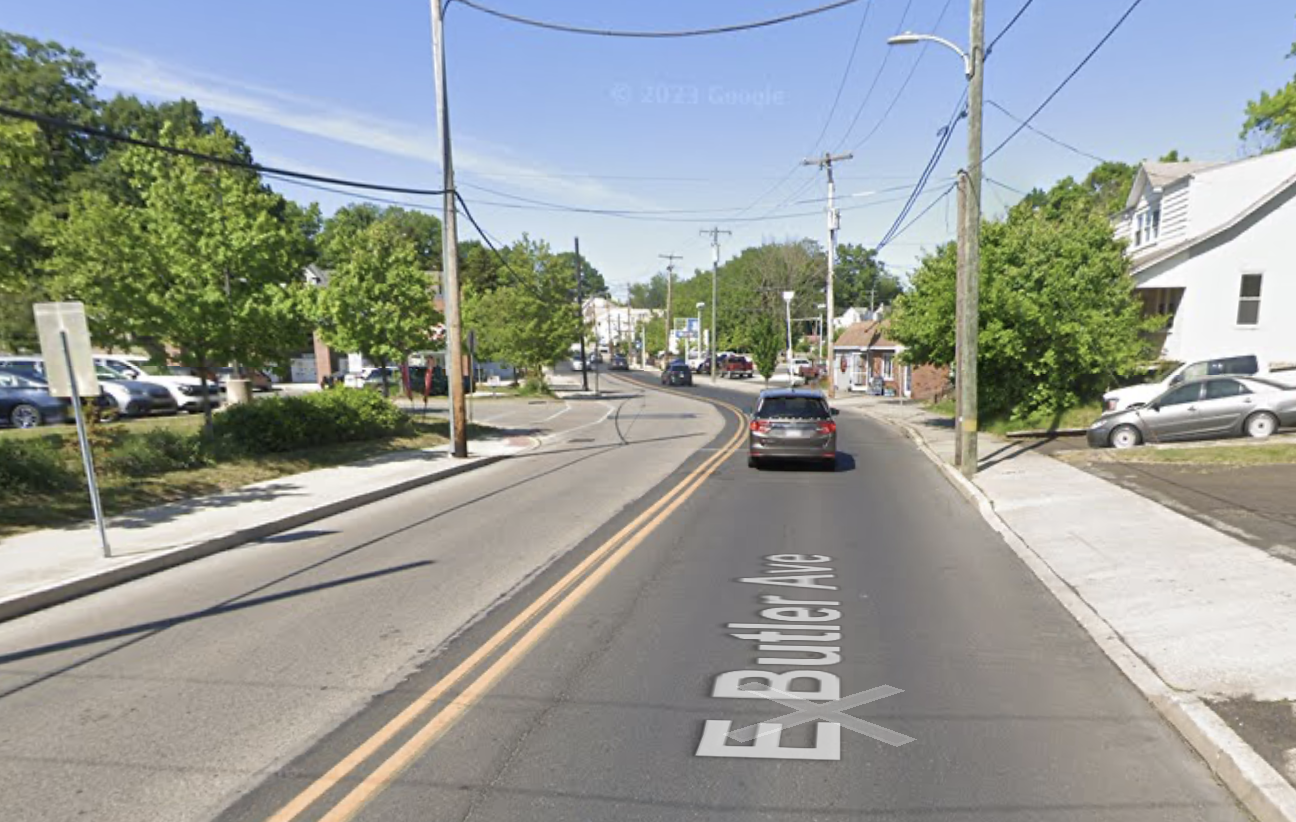
And when a road becomes more comfortable to drive on, it becomes less comfortable to walk on. It's not necessarily unpleasant to walk on this part of Butler, but nor is it a particularly charming pedestrian experience. On this segment of the road, cars come first.
All of that is to say that the environment is not ideal for a public gathering space, especially one that doesn't offer a function besides hanging out. The only purpose of this plaza is to sit, and there aren't many people want to sit in between a CVS parking lot and a road with fast-moving cars.
When I talked to two local civic advocates about the park, they both bemoaned the vegetation choices and said it could be improved with bigger trees and more shade.
"It’s just a space that could be better and shadier and prettier," said Amy Seponara, co-founder of the Ambler Community Garden and one of my all-time favorite podcast guests. "The center of it should absolutely be a huge tree or something."
Hmm. Sure, some shade could help. But I think the best thing to do would be to provide it a more specific function, such as a playground. If you put some decent playground equipment there, nearby families with small children will use it.
One person I spoke to was taken aback by my characterization of the plaza as a failure. It's better than what came before it, he pointed out.
But public policy isn't just about making nice things. It's about making the best thing possible with the resources you have. Turning an ugly parking lot into a pleasant-looking plaza is nice, but it's not as important as building spaces that people will actually use.